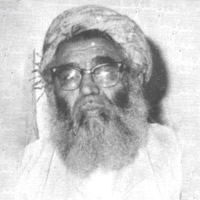
Asghar Khan
A soldier turned politician Asghar Khan was the first Muslim Commander-in-Chief of the Pakistan Air Force. Asghar Khan was born on January...
Read MoreProfessor Ghafoor Ahmad
Professor Ghafoor Ahmad is one of the most respected political leaders due to his mild and serene temperament. He is among those leaders...
Read MoreGhulam Mustafa Khar
Ghulam Mustafa Khar was born in the family of Kharrals in Kot Addu, a village of Muzaffar-garh, district of the Punjab on August 2, 1937....
Read MoreMufti Mehmood
Mufti Mehmood was born on January 1919 in Paniala, District Dera Ismail Khan (N.W.F.P.). He acquired his religious education from Jamia...
Read MoreAttaullah Mengal
Hailing from Baluchistan, Ataullah Mengal is well-known political figure who has been campaigning separatist and nationalist movement in...
Read MoreAwami League’s Six-Point Program
In the 1970 National Assembly elections, the mandate of Sheikh Mujib-ur-Rahman’s Awami League Party was based on a Six-Point Program...
Read MoreFazal Ilahi Chaudhry
Fazal Ilahi Chaudhry was born on January 1, 1904, in Gujrat. He received his early education from his hometown and went to Aligarh...
Read MoreNurul Amin
Nurul Amin was a prominent figure in the politics of Bengal. In 1946, when Huseyn Shaheed Suhrawardy rose to power and became Chief...
Read MoreZulfikar Ali Bhutto
Zulfiqar Ali Bhutto was born on January 5, 1928. He was the only son of Sir Shah Nawaz Bhutto. Zulfiqar Ali Bhutto completed his early...
Read MoreSheikh Mujib-ur-Rahman
Sheikh Mujib-ur-Rahman was born on March 22, 1922, at Faridpur, now in Bangladesh. He was an active member of the Muslim League in...
Read MoreYahya Khan
General Agha Muhammad Yahya Khan was born at Chakwal in February 1917. His father, Saadat Ali Khan hailed from Peshawar. After completing...
Read MoreOuster of Zulfiqar Ali Bhutto
Ever since Zulfiqar Ali Bhutto took over the responsibilities of governance, there was a strong group in the country that was not ready to...
Read MoreGeneral Elections 1977
According to the original schedule, the second general elections in the history of Pakistan, and the first after the dismemberment of the...
Read MoreZulfikar Ali Bhutto becomes Prime Minister
After the promulgation of the 1973 Constitution, the elections for the President, Prime Minister, Chairman of Senate, Speaker and Deputy...
Read MoreFazal Ilahi becomes President
After the promulgation of the 1973 Constitution, Zulfiqar Ali Bhutto was sworn in as the Prime Minister of the country, and Fazal Ilahi...
Read MoreThe Constitution of 1973
The Bhutto Government’s first achievement was the preparation of a Constitution for the country. The most prominent characteristic of...
Read MoreThe Simla Agreement
After the 1971 war, India held prisoner around 93,000 Pakistani troops and civilians. In Pakistan there was a growing demand to get these...
Read MoreThe Hamood-ur-Rahman Commission Report
In December 1971, within a week of replacing General Yahya as the President, Bhutto formed a commission headed by the Chief Justice of the...
Read MoreZulfikar Ali Bhutto becomes President
After the disastrous war with India that ingloriously concluded in December 1971, Pakistan had to face its greatest crisis since...
Read MoreThe Separation of East Pakistan
The separation of East Pakistan was a great setback to Pakistan. By 1970, sentiments for national unity had weakened in East Pakistan to...
Read MoreGeneral Elections 1970
The political history of Pakistan from 1947 to 1970 witnessed no general elections. Thus, when Yahya’s Regime decided to hold the...
Read MoreLegal Framework Order
After the abrogation of the Constitution of 1962, Yahya Khan needed a legal framework to hold elections. In April and July 1969, he held...
Read MoreMartial Law under General Yahya Khan
The Tashkent Declaration signed by the Indian Prime Minister Lal Bahadur Shastri and the Pakistani President Muhammad Ayub Khan was not at...
Read More